Brisbane will be Australia's next property investment hotspot
As China's economy has grown rapidly, people's wallets have become fuller, and more and more are looking for investment opportunities overseas. Among these, real estate is the most common and relatively safe investment product. Australia is also one of the most favoured countries among Chinese investors.
Why are more and more people choosing to invest in property in Australia?
Firstly, Australia enjoys political stability, strong economic development, social harmony, a sound legal system, a beautiful environment and a robust financial system. Thanks to its abundant natural resources and stable financial system, Australia was the only developed nation not overly affected by the 2009 subprime crisis or the 2012 European debt crisis, with its economy continuing to grow strongly. According to a 2016 report on the Human Development Index published by the United Nations Development Program (UNDP), Australia ranked second in the world, behind only Norway.
Secondly, Australia's property market has long been in a state of undersupply, with a shortage of roughly more than 100,000 homes. Strong rental demand is an important safeguard for returns on property investment.
Moreover, Australia's sound legal system (Australian property-related laws) fully protects investors' rights and assets from infringement. Throughout the entire property transaction process, a licensed Australian solicitor provides the buyer with full legal protection, including contract signing, title searches and transaction execution, fully safeguarding the buyer's lawful interests. Australia also places great emphasis on the professionalism of practitioners across all industries. Anyone working in real estate sales in Australia must undergo rigorous professional training and ultimately obtain a licence before they can practise in the industry.
A comprehensive service system for property transactions
Real estate agents provide professional property investment advisory services, helping overseas buyers purchase properties they are truly happy with while maximising investment security and returns; the sale contract is overseen by a solicitor from start to finish; a professional mortgage broker applies for the bank loan on the buyer's behalf; the bank must value the property; before handover, a professional building inspector checks the construction quality of the property and issues a report; and after settlement, a professional real estate agent takes charge of rental management and day-to-day maintenance. This one-stop service gives overseas buyers peace of mind and comfort.
Comparing the advantages of property investment in Australia and China
|
|
Australia |
China |
Title |
Freehold title (no gift tax or inheritance tax) |
40 - 70 years |
Rental return |
4%-7%, with very low vacancy risk (Brisbane's average vacancy rate is around 2%) |
Around 2.5% |
Capital growth |
Average annual return of 8% (based on ten years of data) |
Rapid growth over the past decade, hard to predict, high risk, and very likely already at a growth plateau.
|
Initial investment cost |
Purchasing an off-the-plan property (whether a first or second property) requires only a 10 - 20% deposit up front, with overseas buyers able to borrow up to 60% (the exact loan amount is determined by the buyer's income).
|
A minimum deposit of 30%, around 60% for a second property, with loan approval becoming increasingly difficult.
|
Market transparency |
A well-developed market with fair and transparent pricing (independent bank valuations; transparent property prices and complete transaction histories), a sound legal system, and professional solicitors assisting throughout. |
Not sufficiently fair or transparent |
Ongoing costs after an off-the-plan property is completed |
Fully fitted out; the property is settled and comes with some appliances, ready to rent out immediately with no renovation required. |
Bare-shell properties require significant funds and time for renovation. |
Investment risk |
The 10 - 20% paid as the initial investment is not handed to the developer but is held in a trust account (third party). Neither party can withdraw it before the property is completed; it can only be accessed at settlement. Interest on the deposit is calculated daily from the day it is placed in the trust account until handover, and this interest income belongs to the buyer. The loan can only be arranged at settlement. |
Once you decide to buy an off-the-plan property, you must pay the full deposit, arrange the loan and begin making repayments (whether or not the property is completed), with almost all of the risk during the construction period falling on the buyer. |
According to the Foreign Investment Review Board of Australia's 2015-2016 financial year report, Chinese investors invested a total of A$31.9 billion in Australian real estate that year.
Compared with Sydney and Melbourne, Brisbane will be the next investment hotspot
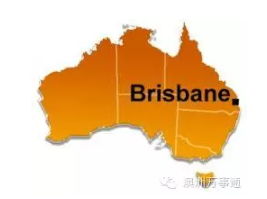
Location Brisbane is the capital of Queensland and Australia's third-largest city. It has a mild climate, plenty of sunshine, a beautiful environment, birdsong and blossoms everywhere, and streets lined with lush greenery. It enjoys a prime location, bordered by the Sunshine Coast to the north and the international tourist destination of the Gold Coast to the south.
Population growth Over the past decade, Brisbane's population has grown by an average of 2.2% per year, making it the second-fastest-growing capital city in Australia. It currently has a resident population of 2.3 million, expected to reach 4.6 million by 2031.

Economy and culture Agriculture and livestock, mining, education, tourism and biotechnology are the pillar industries of Queensland. Brisbane is one of the fastest-growing regions in Australia; since 2001, its GDP has grown by an average of 4.7% per year. Brisbane's economy is booming, currently reaching a scale of US$118 billion and expected to double to US$223 billion by 2031. Large numbers of international students study here each year, and the city has hosted numerous international conferences and cultural exchange events. Brisbane hosted the 1982 Commonwealth Games, the 1988 World Expo, the 2001 Goodwill Games, and the Asia Pacific Cities Summit in 1996, 2003, 2007 and 2011. The G20 Summit was also held here in November 2014. In addition, the 2018 Commonwealth Games were about to be held, and Brisbane was bidding to host the 2032 Summer Olympics. As the capital city on Australia's east coast closest to Asia, in 2013 it was named by the London Financial Times fDi Magazine as one of Asia's top ten cities of the future. 28% of China's total investment in Australia is in Queensland. In Brisbane, Mandarin has become the second most spoken language, followed by Cantonese.

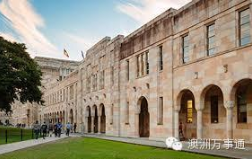
Employment in Brisbane According to the Australian Bureau of Statistics, between 2006 and 2011 Brisbane's fastest-growing employment sectors were: healthcare and social assistance (+28,402); professional, scientific and technical services (+19,247); and public administration and safety (+11,356). Many small employment clusters are spread throughout the city, but there are three areas where jobs are most concentrated: the Trade Coast, the greater CBD area, and the south-west industrial corridor. Employment is precisely one of the main drivers of growth in residential property. People often relocate for work and, in doing so, seek out properties that offer easy commutes and good lifestyle amenities.
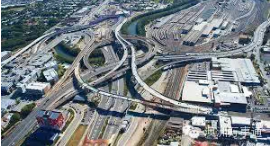
Infrastructure Well-developed infrastructure includes: a world-class international airport with the second-largest number of international visitors in Australia; a busy international port; an extensive network of roads, railways and waterways; an integrated public transport and ticketing network; and a rich array of entertainment, leisure and sporting venues. The government has invested a total of A$134.2 billion in new city infrastructure, including A$97.7 billion for transport, A$6.8 billion for healthcare, A$3 billion for education and training, A$5.4 billion for energy, A$1.5 billion for water, A$3.8 billion for community facilities, and A$1.6 billion for projects already completed.
Finally, the advantages of investing in Brisbane property compared with Sydney and Melbourne
Capital required for investment According to government forecasts, most of Australia's future population growth will be concentrated along the east coast, and compared with Sydney and Melbourne, Brisbane's houses and apartments offer better value for money. At present, the median price of a house in Brisbane is half that of Sydney and A$200,000 - 300,000 lower than Melbourne. Brisbane's stamp duty on property purchases is also 4%-5% lower than in the other two cities. As a result, the upfront capital required for property investment in Brisbane is far lower than in Sydney and Melbourne.
Investment returns and risk Between 2006 and 2010, Brisbane's average property capital growth was 13%, higher than that of Sydney and Melbourne. A growing number of migrants and international students provide a steady stream of tenants for the rental market. In terms of rental returns, Brisbane is more than 1% higher than Sydney and Melbourne. Without taking tax deductions into account, rental investment returns are mostly 4% - 7% or more, which is generally enough to cover loan interest; adding tax-deduction benefits, the returns are even higher, and no additional cash outlay is needed during the holding period.
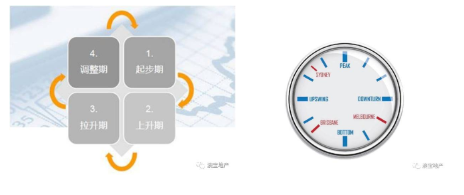
Investment timing Timing is crucial in property investment. The Sydney and Melbourne property markets are in the middle of their latest growth cycle, whereas Brisbane is only at the early stage of a new price-growth cycle, giving it greater momentum. Brisbane's property market is currently at the 7 o'clock position on the clock-style property investment cycle, in an upward phase, making now the ideal time to enter the market and buy.