
Advantages of Investing in Australian Property
Australia offers world-class housing and education resources, along with a comprehensive health and welfare system. At the same time, its free and relaxed lifestyle and extremely low crime rate have seen Australia repeatedly ranked as one of the most liveable countries in the world. Accordingly, Australian property is increasingly favoured by China's high-net-worth investors.

Below, Aobo Realty provides a comprehensive analysis of the advantages of investing in Australian property:
1. A stable property investment environmentLooking at the bigger picture, Australia first enjoys superb natural conditions and welfare benefits. Fresh air, a well-developed social system and a stable political system keep Australia clear of turmoil.

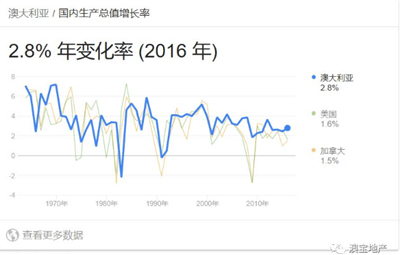
Secondly, the Australian economy is highly resilient. Even during the global financial crisis, Australia avoided a recession, making it one of the few countries in the world to consistently maintain price stability without inflationary pressure. For investors, a country with a stable economic environment is vital, as it determines the level of market risk. The Australian property market has maintained steady growth for many years.
According to RESIDEX statistics, over the past 30 years, Australian property prices have averaged one growth cycle every 10 years, meaning prices double roughly every 7–8 years. In addition, an average annual rental return of 4–7% makes it easy to cover interest with rent, delivering continuous income growth through both capital values and rents.
Australia has strong education resources and a high level of scientific research. Excellent teaching staff have led a large proportion of Chinese families to choose to study in Australia, resulting in a large number of overseas students. This underpins part of the demand in the rental market. At the same time, Australian universities will fully accept China's gaokao (college entrance exam) results, which further consolidates the high investment returns and extremely low vacancy rates of Australian property.
Aobo link:
Good news! Australian universities will fully accept China's gaokao results, and study in Australia is set to boom!
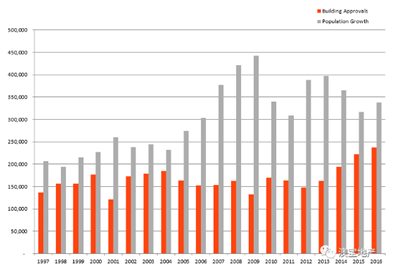
In addition, as a nation of immigrants, Australia offers many migration categories. Compared with countries such as the UK and the US, its migration threshold is relatively low and life is more comfortable, attracting large numbers of overseas professionals to settle here. Data shows that Australia takes in an average of about 150,000 new migrants each year, far exceeding the housing supply. It can be said that education and immigration underpin demand in the housing market, adding a further layer of security to investing in Australia.
[Image] Australia's annual population growth far exceeds housing approvals
Australia's property industry ranks first in the world for its high degree of information transparency. Construction costs and property prices are largely fully transparent and controlled, and profit margins fall within clearly defined legal ranges. Through the relevant agency websites, you can also access detailed data on developers and developments, including the education levels, age brackets and occupational profiles of nearby residents, providing a basis for rational analysis. Moreover, Australian property prices are set with the involvement of multiple parties and are openly quantified by banks and other professional valuation bodies, while government departments maintain long-term statistical analysis of local area prices — making prices and profits almost entirely transparent.
4. A well-regulated property marketThe Australian government strictly regulates the qualification and accreditation of those working in the property industry, including lawyers, agents and brokers. Professionals engaged in property activities must hold certain qualifications and relevant practical experience, pass examinations to be issued qualification certificates, and be registered before they can practise — the industry is highly regulated. Whether buying, selling or managing rentals, Australia has the most comprehensive system in place to protect property owners. For overseas buyers, a clear and transparent operating market guarantees the safety of their investment; buyers need not worry about managing things themselves and can invest overseas from the comfort of their own home — hassle-free and with peace of mind.
5. Tightly controlled construction volumes and low vacancy ratesThe year-on-year rise in Australian property prices over recent decades is also closely tied to migration numbers. Substantial annual population growth has strongly boosted domestic demand, yet the government tightly controls housing approvals and construction volumes lag far behind population growth, directly creating a situation where rental properties are hard to come by. By international convention, a housing vacancy rate between 5% and 10% is considered reasonable, indicating a balance of supply and demand that supports healthy economic development; a rate between 10% and 20% is a danger zone requiring certain measures, while a rate above 20% indicates a serious oversupply. Australia's annual housing vacancy rate is generally maintained below 3%, well below the world average. According to government statistics, Australia's population grows by an average of 3,800 people per week, with an annual migration quota of around 200,000. By 2031, Australia's housing demand is expected to exceed supply by 663,000 dwellings.
6. The advantage of freehold titleAustralia follows the tradition of English common law, with private ownership at its core. The vast majority of Australian land is privately owned, with owners holding freehold title and rights of inheritance, and there is no inheritance tax. Australia is also one of the few developed countries in the world with no property tax, effectively reducing the cost of long-term holding.
7. Low deposit and flexible asset portfoliosOne of the most attractive features of Australia for overseas investors is the low deposit required to buy property, flexible asset portfolios, low investment risk and ample financial leverage. A low deposit of 10–20% makes it affordable for the vast majority of people. Compared with shares and funds, property is the most stable investment, and in Australia the 10–20% deposit is held in a trust account, government-regulated, and even earns interest — completely risk-free. Australia allows loans to overseas buyers, with borrowing of up to 70% making it easy to cover interest with rent. It also allows you to keep a property rather than sell it and instead cash out its capital gains from the bank, achieving an asset portfolio where "one property becomes two, and two become four", using financial leverage to maximise returns.
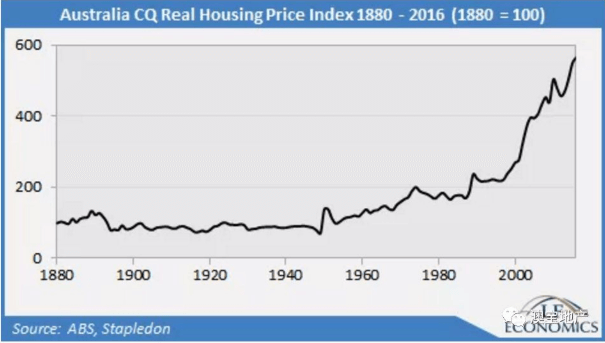
8. Strong capital growth potentialIn Australia, thanks to a combination of factors such as government regulation and a stable economy, property price trends are remarkably stable, roughly doubling every seven to ten years.
The Australian Bureau of Statistics has conducted detailed data research on this:
[Image] Australian property value trends over the past 100 years
Many people unfamiliar with Australia worry about whether there are legal risks in buying property here. Australia has a robust system of checks and balances, a highly respected judicial and law enforcement system, and an open, effective and transparent legal framework. Australia's property market is subject to strict national regulation, and buyers are protected in many ways, so the risks are very low. This is reflected in the following aspects:
① Appropriate separation of responsibilities to prevent a unified interest group forming
The Australian system is highly rigorous, largely inheriting the traditions of English law. This is evident across various areas. For example, banks bear market risk independently, ensuring they objectively assess property values and market risk when providing mortgages and avoiding financial risk and over-investment; relevant government departments independently bear responsibility for approving the various matters requiring approval, with the relevant processes disclosed in step; and developers build strictly in accordance with the approved plans, with the final approval documents incorporated into the owner's purchase contract and subject to public oversight. Australia's legal system stipulates the appropriate separation of each party's responsibilities, preventing a unified interest group from forming and greatly protecting buyers.
② Australian property transactions require the mandatory involvement of lawyers and agents
Buying and selling property in Australia must be done through a qualified agent, with lawyers involved throughout. Australian purchase contracts involve a wide range of specialist knowledge that an ordinary owner or salesperson cannot fully master, so both parties must have lawyers. Even without contractual factors, buying property through a lawyer is mandatory, so owners need not worry about breaching regulations or the law.
③ The deposit is held and managed in an independent trust account
The concern most on the minds of overseas buyers is whether the deposit paid when buying off-the-plan is safe — and in Australia there is absolutely no need to worry about this. The law requires that the deposit in Australia be held in a trust account jointly regulated by lawyers and the government, and neither the developer nor the buyer can touch this money. This account also earns interest, rather like a term deposit. The buyer only pays the remaining amount once the property is handed over and inspected without issue. In other words, the developer only receives the funds after handover and inspection have been passed — somewhat like China's "Alipay", where payment is only made once the goods are received. If the developer collapses or goes bankrupt part way through, the government will return the 10–20% deposit together with interest to the client, providing a high level of security and safeguarding the most basic interests of every client.
10. Advantages in the detailBuying a property is a significant matter, and from the preceding analysis of the environment, market and legal framework, the Australian property market is already a relatively low-risk, highly stable and safe investment. Yet Australia is even more reassuring when it comes to handling the finer details of property.
① Full fit-out

All apartments in Australia come fully fitted out and are ready to move into once completed. Beyond the basic fixtures, Australian apartments come equipped with virtually all essentials, such as a microwave, dishwasher, dryer, gas, air conditioning, oven, carpet and curtains. You only need to add soft furnishings such as beds, sofas and a fridge to move in. In addition, Australia's construction industry is of solid quality and strong in design. Major local Australian developers deliver excellent quality with minimal external depreciation, keeping properties looking as good as new for a decade. Many of Australia's large developers are world-renowned, and the buildings they create are the envy of the world.
② Thorough ongoing maintenance
Residential communities in Australia are very clean and tidy, and complexes that are already more than a decade old look almost brand new. Part of this is due to residents taking care of their homes, but more importantly it comes down to good property management. From the very start of screening tenants, the leasing management company gives priority to grading tenant quality, selecting well-paid white-collar professionals with stable incomes to guarantee tenant quality. Property management also carries out daily cleaning of the apartments, regularly cleans carpets, and regularly maintains facilities such as swimming pools and gyms, with careful fire safety inspections too, ensuring the building maintains a safe and comfortable living environment and is well looked after over time.
In recent years the Australian property market has grown increasingly popular, with substantial investment from many well-known figures in China. In 2014 alone, capital flowed in from the likes of Li Ka-shing, Wanda, Greenland and Country Garden. ARA Asset Management, controlled by Asia's richest man Li Ka-shing, has already begun positioning itself in the Australian property market, and the Wanda Group has also announced the acquisition of a project on Australia's Gold Coast. When the market's pioneers have already begun to step in, savvy investors know they must quicken their own pace.
Dong Fan, a well-known Chinese real estate research expert and professor at Peking University, has also offered his analysis: Australia is the overseas property investment market he is most optimistic about. After eight months of analysis and comparison, Dong Fan reached a conclusion on the investment prospects of nine overseas countries: "Canada's property market is passable; the US, Hong Kong and Singapore have average prospects; I do not advocate investing in property in Japan, South Korea or Europe; while Australia is impeccable." Dong Fan's reasons were that the US has both property tax and inheritance tax — if investors want to pass their assets to their children, they must pay 30%–70% inheritance tax, and loans are only available from a small number of banks such as local banks, with many additional conditions attached. Compared with the US, Canadian property investment has no inheritance tax but requires a high deposit. Hong Kong property is unsuitable for investment, being highly volatile with a not-too-promising outlook. Singapore's economy is small in scale and its industrial structure is flawed. Japan has no resources, sits on an earthquake belt, and its property prices do not rise. South Korea's period of high property price growth has ended. If one must go to Europe, only the UK is worth considering, as German property prices basically do not rise." So in Dong Fan's view, Australia is the best place to invest. Many high-net-worth individuals have already bought property in Australia, and a large number of people in China are buying property overseas. Based on current client feedback and the Australian property market as a whole, the returns have been very satisfying.

In addition, in August 2016 CCTV2, the CCTV finance channel, also analysed on air the five key factors currently driving Australian property values, giving viewers a comprehensive understanding of the state of Australian property investment, including: loose monetary policy, relaxed immigration policy, interest-only loans, private land ownership and expectations of capital growth. The finance report further affirmed the value and stability of Australian property investment.