
Net population outflow from Sydney, with Brisbane a major destination for new arrivals
According to Business Insider, Australia's population growth continued to accelerate over the 12 months to September last year, driven mainly by migration, most of which was fuelled by student visa applications.
According to the Australian Bureau of Statistics (ABS), Australia's population grew by 395,600, or 1.63%, over this period, bringing the total population to 24.7 million.
In the third quarter of last year alone, the population rose by 103,900, or 0.42%. Net overseas migration for the full year increased by 250,100, accounting for 63.2% of Australia's total population growth. However, natural increase (births minus deaths) contributed the remaining 36.8% of the growth, falling to 145,500, below the average of previous years.
While the overall population continues to climb, subtle shifts are beginning to emerge in the distribution of population across the country's individual cities.
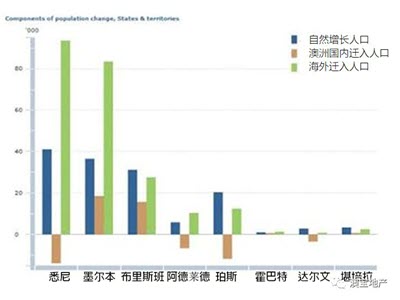
As Australia's largest city, with a population of around 5 million, Sydney has long been renowned worldwide for its pleasant climate and beautiful scenery. Yet a closer look at the population data of recent years (Sydney gains an average of 85 people a day but loses 129. Since 1971, Sydney's net loss of local residents has been close to 720,000) starts to reveal some telling signs.
Let's hear what Sydney residents have to say:
Newtown - People often walk barefoot along grimy King Street, rain or shine. It's a real mix here — students, hippies, fashionistas and more. Even the shop windows carry signs reading "Keep Newtown Weird and Safe".
McMahons Point - The place is absolutely packed every New Year, you can barely find a parking spot on weekends, and when the tide comes in the beach at McMahons Point gets submerged.
In recent years, the influx of overseas migrants and the departure of local-born residents have largely reshaped the city's demographic makeup. According to ABS figures, in 1976 fewer than 25% of Sydney's residents were overseas migrants. Forty years on, overseas-born residents now make up nearly 40% of Sydney's population.
"Fleeing" Sydney
Among the tens of thousands leaving Sydney, Australia's third-largest city, Brisbane, has become the most desirable destination thanks to its distinctive outdoor lifestyle, its diverse and vibrant urban communities and the abundance of natural assets nearby, with almost half of the remainder relocating to other parts of New South Wales.
Sydney sociologist Mark McCrindle says young people choose to come to Sydney for their education and then start their lives there, only to leave again as they get older. Over the long term, more people are leaving than moving in, which reflects the gradual weakening of the city's appeal to residents.
By area, the greatest population loss has been in Sydney's western suburbs; by age structure, most residents choosing to leave Sydney are aged between 25 and 44 and between 0 and 14, which means those moving out are typically whole families relocating, rather than retirees wanting to move elsewhere for a quieter life.
Reasons for leaving
Analysts point out that Sydney's surging house prices are one of the main causes of local population loss. A recent annual international housing affordability survey ranked Australia as the third least affordable country in the world for housing.
The independent think tank the Grattan Institute has released a recent analysis showing that home ownership rates among young Australians and lower-income groups have fallen sharply. Last week, property data company CoreLogic released a nationwide property report showing that Australian house prices have fallen 0.8% since September 2016. Sydney's housing market is the weakest, with prices falling 2.4% in the last quarter. Even so, Sydney's median house price remains well above A$1,000,000.
Beyond housing, respondents believe that persistently high living costs, worsening traffic congestion, an increasingly tough job market and mounting pressures of all kinds are issues that people living in Sydney cannot avoid.
While strong population growth helps boost employment and has underpinned economic activity since the GFC, there is growing concern that Australia's current infrastructure development is too slow to keep pace, leading to overcrowded schools, hospitals and public transport, rising house prices, slow wage growth for workers and other economic pressures.