
Brisbane Steps Onto the World Stage
Brisbane, Australia's third-largest city, enjoys a subtropical climate — warm and comfortable all year round. It is also one of the key cities the Australian government has prioritised for future development and promotion, an international stage on the verge of becoming a true "world city". Every one of us who lives here is fortunate to be witnessing its dramatic transformation at this very moment. The local economy has maintained rapid growth for many years, with a total GDP of A$157.9 billion in 2016, making it one of Australia's most important commercial centres.
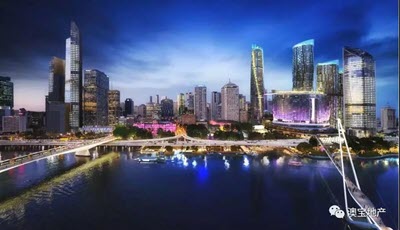
In recent years, the Australian government has been developing major plans for Brisbane. Among them, the "Brisbane City Infrastructure White Paper 2018–2025" has caught the attention of high-net-worth investors. Below, Aobo Realty takes you through the details of this white paper.
A highly attractive business environment
Brisbane has become an emerging economic powerhouse and a gateway to the Asia-Pacific region. As the state capital closest to Asia on Australia's east coast, Brisbane offers a highly attractive business environment, and the region's contribution to global economic growth continues to increase.
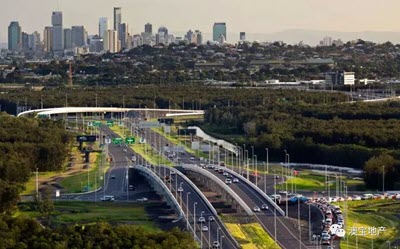
Rich in resources and energy
Brisbane is a major hub for Australia's resource and energy giants, as well as an important centre for research and innovation. Throughout the global economic downturn of the past five years, it has been a vital driving force behind Australia's continued economic growth, achieving 21 consecutive years of economic expansion and consistently powering the development of the Australian economy.
By 2031, Brisbane's total economic output is forecast to grow from A$135 billion to A$217 billion. Driven further by this economic growth, a number of development projects aimed at enhancing city life have been approved or have already begun construction over the past few years.
The Queensland government has already invested more than A$134.2 billion in city infrastructure — far more than other Australian cities have spent on infrastructure over the same period. The earliest of these projects is expected to become operational in 2022, and each will bring enormous change to Brisbane's cityscape and to residents' living experience.
Investment Plan 1
Queen's Wharf QUEEN'S WHARF
Investment of over A$3 billion
The project is expected to be completed in 2022
Queen's Wharf, with nearly 200 years of history as the birthplace of European settlement in Brisbane's city centre, is one of Australia's greatest cultural heritage sites. Now, Queen's Wharf will be brought back to life through careful restoration and redevelopment, adding an unmissable and stunning highlight to Brisbane's cityscape.
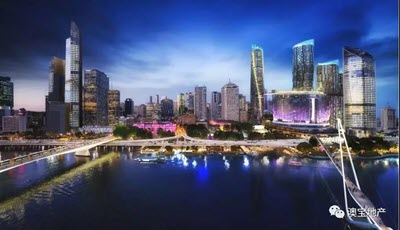
The new Queen's Wharf redevelopment is the largest privately backed development in Brisbane's history to date, covering 12 hectares — around 20% of the entire Brisbane CBD. When complete, it will be a brand-new, world-class integrated resort.
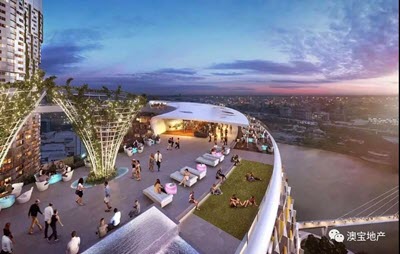
Queen's Wharf will also attract large numbers of new international tourists and business investment. Its design incorporates a super commercial and entertainment complex: 5 world-class hotels, 50 restaurants, a large casino, public space larger than 12 football fields, a landmark arc-shaped opera house, an enormous circular sky deck, cinemas, and a brand-new pedestrian bridge connecting to South Bank Parklands on the opposite bank.
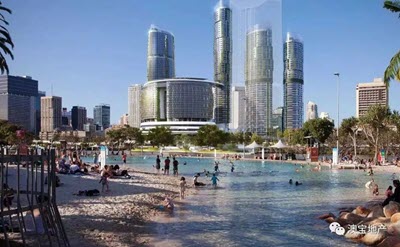
After fierce competition among development proposals, the federal government ultimately resolved that Star Entertainment Group, the Far East Consortium of Australia and Chow Tai Fook would collaborate to advance the planning and delivery of the Queen's Wharf integrated resort.
According to forecasts, the Queen's Wharf project will add up to A$1.69 billion a year in revenue to Brisbane's tourism industry, along with 1.39 million visitors annually.
Investment Plan 2
Northshore Hamilton NORTHSHORE HAMILTON
Capital injection of over A$5 billion
The project is expected to be completed in 2018
On 27 March 2008, the Queensland government officially announced that Northshore Hamilton (Northshore Hamilton PDA) had become Brisbane's largest current riverside urban renewal project, spanning 304 hectares and just 6 km from the CBD.
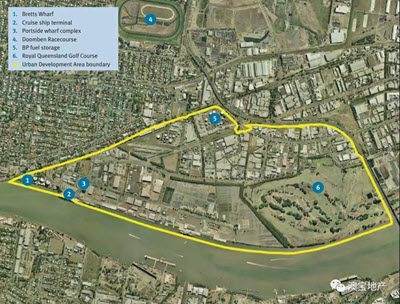
The establishment and delivery of this project will help transform more than 300 hectares of industrial land over the next 20 years, redeveloping it into a vibrant riverside precinct worth A$5 billion. At the same time, it will cater to the quality lifestyle of around 15,000 local residents and provide approximately 15,000 jobs across the area's retail and office precincts.
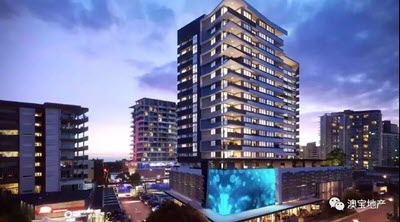
Once complete, Northshore Hamilton will play an important role in positioning Brisbane as an international city of the future.
Investment Plan 3
300 George Street BRISBANE QUARTER - 300 GEORGE STREET
Investment of over A$1 billion
Stage one of the project is expected to be completed in 2018
At 300 George Street, Brisbane Quarter is the city's first integrated, world-class commercial precinct development. Once complete, this fully realised world-class mixed-use residential and commercial precinct will overlook Brisbane's magnificent skyline from the riverfront.
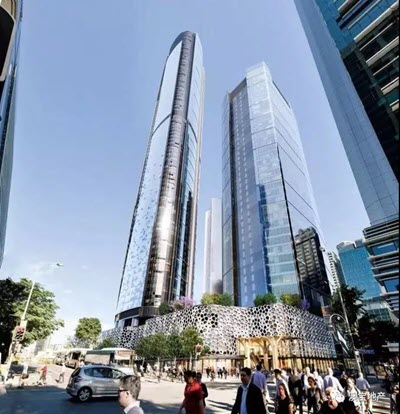
This integrated building complex will include Australia's first purpose-built W Hotel, a premium two-level spa and wellness centre, a level-four open-air rooftop garden, a 40-storey premium office tower with a total floor area of 48,000 square metres, and an 82-storey luxury apartment building.
The project broke ground in September 2015. Stage one includes a seven-level underground car park, retail and hotel infrastructure, and the overall structure. According to the schedule, the first tenants of Brisbane Quarter will move in around the middle to latter part of 2018.
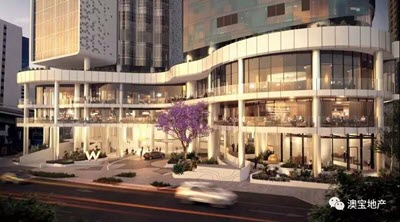
To date, Brisbane Quarter — connected to the adjacent Queen's Wharf project — has attracted several world-class development companies to invest more than A$4 billion in the area. Peter Hia, General Manager of Shayher, the principal investor in Brisbane Quarter, noted: "The development of an integrated, world-class commercial precinct in this area is highly unique on a global scale, and there is currently no other project of its kind to compare with it. We believe that once this area is completed and in use, it will provide considerable momentum for Brisbane's push towards internationalisation, and will transform it into Brisbane's next iconic tourism and commercial hub."
Investment Plan 4
Howard Smith Wharves HOWARD SMITH WHARVES
Investment of over A$100 million
The project is expected to be completed in 2020
In 2013, Brisbane City Council invited developers to submit applications to revitalise Howard Smith Wharves, located directly beneath the Story Bridge, to create a world-class waterfront precinct that would provide Brisbane residents with a brand-new leisure and entertainment destination as well as a tourism-grade landmark.
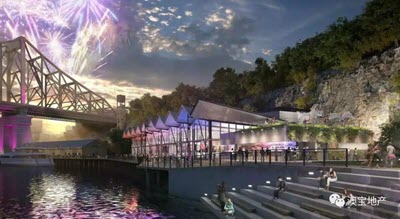
After a rigorous review, the Council announced in 2014 that the project — an investment of more than A$100 million — would be delivered by Adam Flaskas and Elisha Bickle, who had previously run the Victoria Park development project in Brisbane. Under the nomination, the project would be built by renowned construction firm Hutchinson Builders, responsible for constructing new facilities and restoring the heritage buildings at Howard Smith Wharves.
Howard Smith Wharves covers around 3.43 hectares of riverside land, of which 2.7 hectares is open public recreation space, paired with a 164-room 5-star arts hotel, a 1,500-square-metre exhibition space, an underground car park for 359 vehicles, and premium restaurants and cafés.
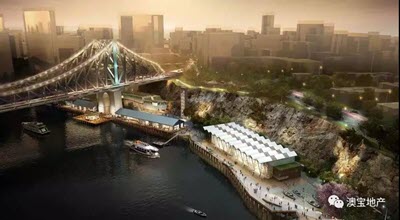
The redevelopment aims to respect the area's culture and will incorporate the restoration of some heritage-listed buildings. The new green space will also take pedestrians and cyclists into account, connecting the New Farm area with Brisbane's CBD via a riverside walkway and cycleway.
Investment Plan 5
Cross River Rail CROSS RIVER RAIL
Investment of over A$5.4 billion
The project is expected to be completed in 2025
According to statistics, the population of the densely settled areas of South East Queensland is forecast to grow from the current 3.5 million residents to 4.9 million by 2036. Although more than 80% of this population growth will occur in regional areas outside Brisbane, over the same period more than 45% of employment growth will be concentrated within Brisbane's main city area, placing enormous pressure on daily transport. Driven by the region's population and employment growth, passenger demand in Brisbane's city area is expected to almost triple by 2036, which means that travel times to and from Brisbane will become critically important.
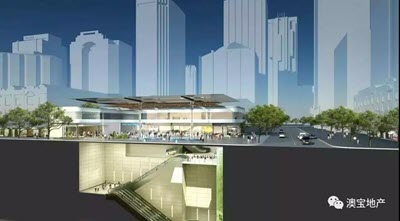
A single rail line across the Brisbane River can carry a maximum of just 24 trains per hour, and today it has already reached a peak of 21 services per hour. Cross River Rail will eliminate this bottleneck by combining above-ground and underground transport to double capacity, allowing more trains to run more frequently on each major rail line, easing peak-hour public transport congestion. Combined with new dedicated busways and new roadways, it will deliver an overall upgrade to the entire city's transport system.
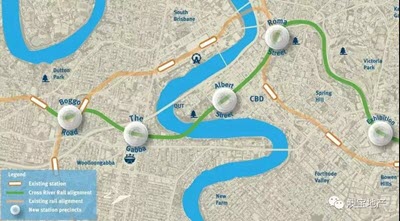
At the same time, in removing this core bottleneck, the project also allows more trains to run across the whole of South East Queensland. The increased capacity of the transport network will mean that by 2036, an estimated 106 trains per hour will carry residents to various areas during peak periods — compared with just 66 trains per hour back in 2016.
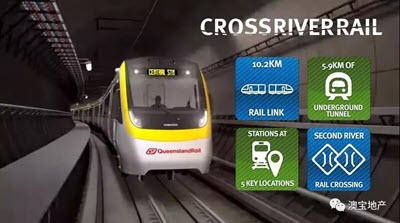
Cross River Rail runs a total length of 10.2 km, passing between Dutton Park and Bowen Hills, including 5.9 km of underground tunnel beneath the Brisbane River and the CBD. In addition, the project includes the construction of four new underground stations — at Boggo Road, Woolloongabba, Albert Street and Roma Street — as well as upgrades to the existing above-ground stations at Dutton Park and Bowen Hills.
In June 2017, the Queensland government committed to fully funding the Cross River Rail project. Following this, the 2017–2018 national budget allocated A$2.8 billion, with a further A$2.6 billion in follow-on funding to be delivered over the coming years.
After looking at these five infrastructure projects, with a combined investment of more than A$14.5 billion, don't you immediately get the sense that Brisbane's investment prospects are boundless? Aobo Realty now takes you through another five infrastructure projects worth over A$10 billion combined.
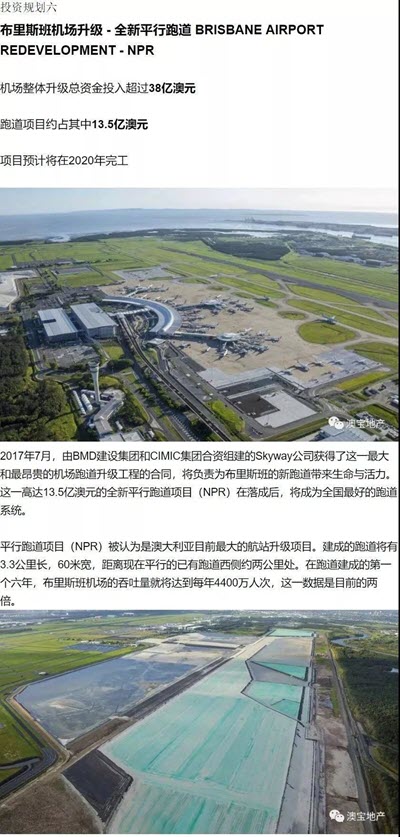
After reclaiming 360 hectares of wetland, the project brought in 11 million cubic metres of sand through Moreton Bay to fill the construction site's 60-metre-wide, 12-kilometre-long taxiway. Over the following four years, the weight of the sand and the additional pressure created by 330,000 wick drains pumping water to the surface further compacted the foundation, laying a rock-solid base for the runway's construction. Once the base is ready, construction of the new runway and taxiway will begin.
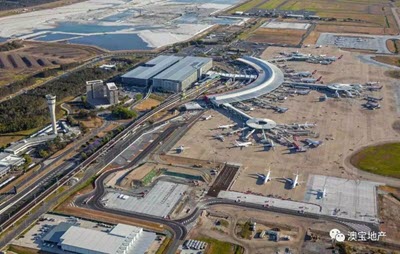
The new runway construction is divided into three parts. The first part is site preparation (completed), including site clearing, road construction, major drainage works, and site planning for the parallel runway system. The second part is dredging and reclamation works (completed), including clearing the rest of the site, extracting sand from Moreton Bay, stockpiling sand on site, and a four-year ground settlement period (2014–2018). The project is now in its final stage; once the surplus sand is cleared, the asphalt pavement is laid and settled, and the airport infrastructure is added, final commissioning and test runs will begin.
With carrying capacity on par with Singapore's Changi Airport, this will further open up the international tourism market for Brisbane Airport. It is forecast that by 2035, flights between Brisbane and China will increase from 227,000 in 2014 to 360,000. At the same time, the New Parallel Runway (NPR) will bring around A$5 billion in economic benefits to the region each year and create more than 7,800 jobs.
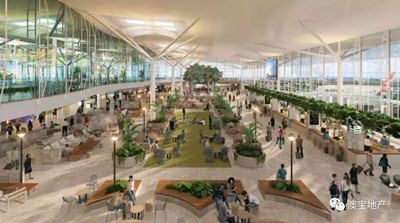
Among the series of upgrades to Brisbane Airport's domestic and international terminals, redevelopment of existing facilities also continues. This work is part of the upgrade development strategy and helps move the airport a step closer to its goal of becoming a major gateway for Australia. In addition, an upgrade to the domestic terminal (DTB) fire system will cost A$29 million. Although the current DTB fire system fully complies with all of Australia's safety standards, the increase in passenger numbers brought about by the new runway and terminal expansion is driving the continued upgrade and expansion of these terminal services.
Investment Plan 7
Brisbane Metro BRISBANE METRO
Investment of over A$900 million
The project is expected to be completed in 2022
In 2016, Brisbane City Council released the concept for the Brisbane Metro. As an efficient rapid transit system, its purpose is to make travel more convenient, reduce the number of transfers, and ease congestion on public transport in the CBD.
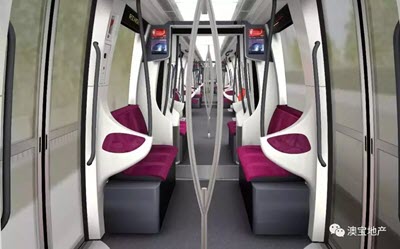
The Metro is being introduced to address the challenges currently facing Brisbane's bus network, which has already reached saturation across many inner-city areas. The Council has completed a series of technical assessments for the project and has consulted extensively with the community and key stakeholders. According to reports released by the city, the project is expected to begin early construction in 2019 and be completed and in service by 2022.
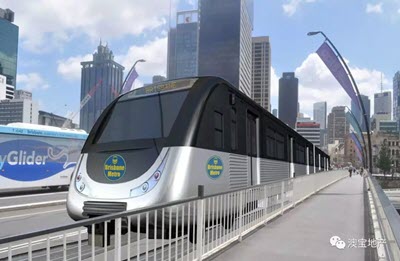
Today, the Brisbane Metro plan can operate over 21 km, connecting approximately 12.8 km of flat terrain, and makes use of existing large bus interchanges as connecting infrastructure to seamlessly link the Eight Mile Plains bus station, the Royal Brisbane and Women's Hospital, and the University of Queensland bus station. In practical operation, the project will also roll out 60 brand-new, rubber-tyred trackless vehicles, each able to carry up to 150 passengers to their destinations.
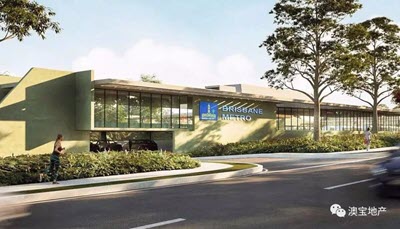
The Brisbane Metro is planned to run frequently, with services roughly every 3 minutes on average. At the same time, the areas served by the Metro will not be limited to the city; it will also expand further into the suburbs in the future — aiming to ease CBD congestion while providing more public transport services to suburban areas.
This will not only greatly increase the carrying capacity of the existing bus network, lifting peak-hour capacity to 22,000 passengers per hour. In addition, the Metro will connect the city's major health, cultural, educational and entertainment centres, making residents' lives and travel far more convenient.
Investment Plan 8
Brisbane Live BRISBANE LIVE
Investment of over A$2 billion
The project is expected to be completed in 2024
AEG Ogden, a subsidiary of AEG — the world's largest venue operator — has announced it will invest A$2 billion to build a mixed-use development in Brisbane called Brisbane Live. This is a super entertainment precinct able to seat more than 17,000 people, designed to host international-level concerts, performances and sporting events. Inspired by New York's Madison Square Garden, it will sit above the historic and culturally significant Roma Street Station, providing Brisbane residents with a brand-new stage for entertainment.
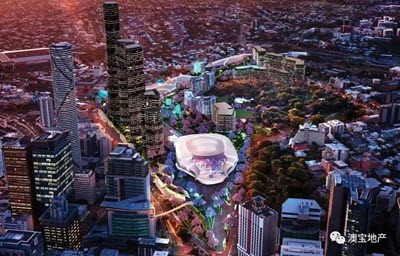
The planned construction includes a huge sliding screen wall used to broadcast the performances on stage. This project, worth hundreds of millions, also includes a A$450 million arena and a rock club able to hold more than 4,000 people. Together with the surrounding cinemas, restaurants, bars and open-air theatres, this will become Brisbane's true "entertainment hub".
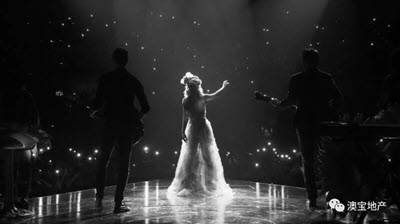
Similar to Melbourne's Federation Square, this brand-new entertainment precinct will take advantage of existing rail lines to connect to every area where Brisbane residents live, allowing people to reach the venue more quickly in the future. The project will also benefit from two public transport projects — Cross River Rail and Brisbane Metro. Both will converge for transfers at Roma Street Station, capable of perfectly directing and dispersing thousands of patrons in and out within just a few minutes.
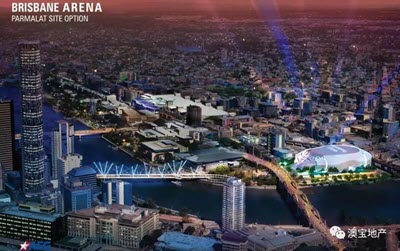
At the same time, the precinct plan also includes a proposed 90-storey residential tower with as many as 4,000 brand-new apartments. This development aims to accommodate more residents in the Roma Street community in the future, allowing them to live comfortably in a central city location. In addition, around the heritage buildings of Roma Street Station, a mixed dining precinct, medical facilities and some planned educational facilities will also be built.
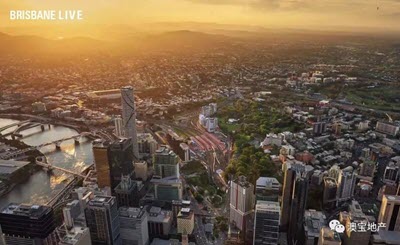
The establishment of Brisbane Live will bring more than 10,000 new jobs to the regeneration of this area, meaning more people can work and live within the city area — creating the conditions for Brisbane's further expansion.
Investment Plan 9
Millennium Square MILLENNIUM SQUARE
Investment of over A$2 billion
The project is expected to be completed in 2025
Brisbane's News Corporation will establish a major urban renewal project at Bowen Hills, named Millennium Square. According to plans announced by Australia's News Corporation, this regional revitalisation project — worth more than A$2 billion — will inject new economic strength and more jobs into the Bowen Hills area.
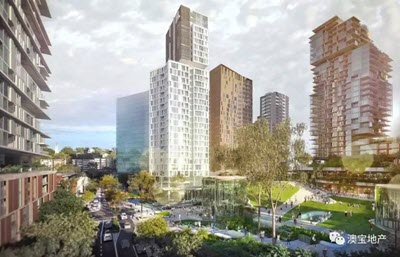
The project will be a joint collaboration between News Corporation and PwC. The entire redevelopment covers around four hectares of land in the Bowen Hills area, which designers and the development group will design and redefine as an integrated, mixed-use residential and commercial, world-class multimedia hub. The first stage of commercial floor space development is expected to begin at the end of 2018, while development of more residential and retail projects is expected to break ground in 2021–2022.
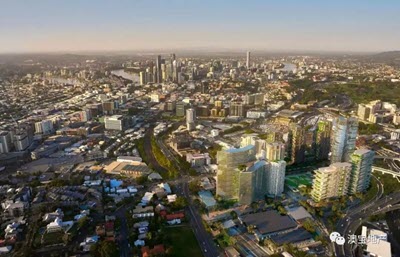
Millennium Square's commercial floor space will reach 44,000 square metres, able to house the vast majority of News Corporation's major business divisions, such as The Courier Mail, The Sunday Mail, The Australian, Quest, News Regional Media and Sky News. In addition, there will be around 42,000 square metres of retail space, including supermarkets, markets, cinemas, cafés, bars and restaurants to support the busy pace of work and life here. In the future, there will also be a total of seven residential buildings to be built, providing more than 1,700 homes, along with a luxury hotel with 187 rooms.
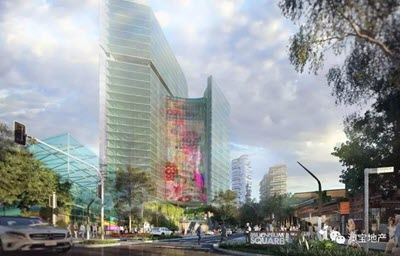
The building will also provide technologically advanced workspaces for other private enterprises focused on the technology, media and knowledge industries, creating a brand-new, world-class media hub for Queensland. The area's development will also be specifically designed with movement corridors that seamlessly connect to Bowen Hills train station, providing more convenient transport options and giving the greatest consideration to the transport needs of the residents who will work and live here in the future.
Investment Plan 10
Brisbane Showgrounds Regeneration BRISBANE SHOWGROUNDS REGENERATION
Investment of over A$2.9 billion
The project is expected to be completed in 2026
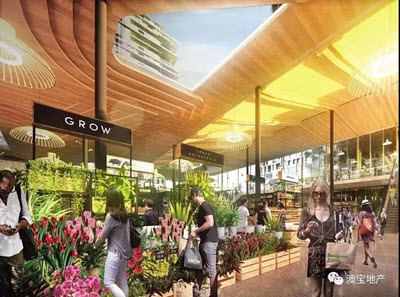
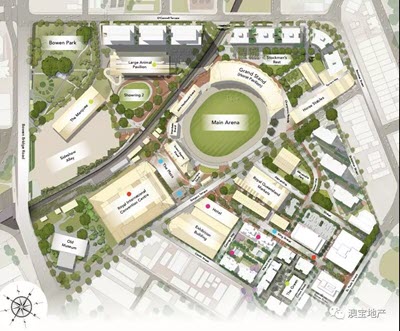
The Brisbane Showgrounds redevelopment is a major collaboration between the Royal National Agricultural and Industrial Association (RNA) and leading developer Lendlease. The redevelopment represents the evolution of the existing Brisbane Showgrounds event precinct, designed and planned with the mission of providing a brand-new, world-class entertainment and events hub. Once complete, the new Brisbane Showgrounds will become an integrated urban "super precinct" combining residential, commercial, retail and cultural roles, accommodating more than 20,000 people to work and live here.
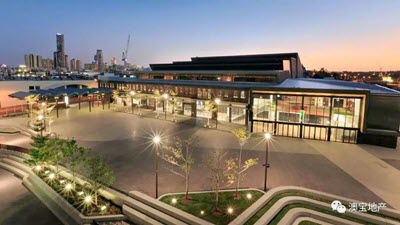
Covering 22 hectares, this vibrant precinct sits adjacent to the inner-city area of Fortitude Valley, just 1.6 km from the Brisbane CBD, and is the largest current brownfield development project in Australia. The project includes 340,000 square metres of new residential, commercial and retail buildings, as well as an additional 76,000 square metres of newly developed land on RNA reserve land.
The Brisbane Showgrounds redevelopment represents a total investment of more than A$2.9 billion , part of which comes from a loan by Lendlease to Queensland Treasury. Once complete, it will add A$300 million a year in economic benefit to the region, while also supporting Brisbane's further urban population growth and expansion and providing more than 2,000 jobs.
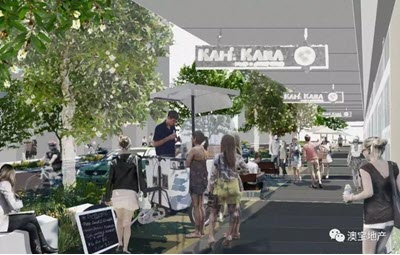
This 15-year redevelopment plan began in April 2011 and reached its first stage milestone in 2013 — the establishment of the Royal International Convention Centre and the adjoining plaza facilities. In 2014, the RNA and Lendlease released the second stage plan, which saw the completion of the residential project The Green, the Rydges Hotel and the commercial building Kingsgate, and the start of construction on a further residential project, The Yards. The third stage of the project began in August 2016, focusing on the start of construction on the retail concept precinct Kings Coop and a multi-storey car park.
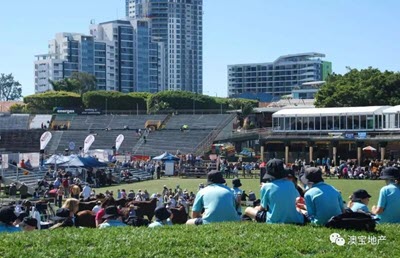
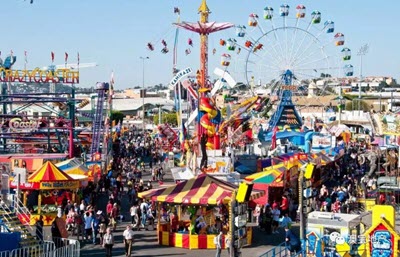
Most remarkable of all is that, throughout the 15 years of upgrading and transforming the entire showgrounds precinct, the EKKA — woven through the childhood memories of Brisbane residents — has still been held here every year as scheduled, bringing joy and happiness to families just as it has for decades.
Having reviewed this summary of ten city infrastructure projects worth a combined total of more than A$26 billion, are you tempted?
Here
There is not only brilliant sunshine
Not only genuine, down-to-earth residents
But also delicious food
And boundless opportunity
The future is full of promise
Are you ready?