
A Brief Analysis of Investing in Australian Property
If you're looking to invest and enter the Australian property market, how should you assess a potential investment?
People invest to make money — that much is obvious to everyone. But how exactly do you make money? That's not always so easy to explain. Some say to look at the rent, some at the title, some at the price, some at the location, some at development potential… there are many bases for making an investment decision, and opinions vary. In truth, none of these ideas and views is wrong overall, but they amount to unsystematic "primitive investment thinking". To remain invincible amid the tides of investment, you need to elevate this investment experience to the level of thinking with data, and establish an investment philosophy that holds true everywhere.
Specifically, when it comes to the principles for selecting residential or investment property in the Australian market, first, look at the direction of cash flow — that is, after you buy the property, will you keep paying out of pocket, or can the property sustain itself, or even generate a surplus; second, look at the capital growth rate, that is, how much premium the property can deliver in the future. The first aspect can usually be assessed through the rental yield, while the second is generally viewed through several decades of a market's historical data.
Data on Australian property
According to data released by BIS Oxford Economics, the profit margin of Australian residential property will grow steadily over the next 5 years, offering investment potential.

The Australian property market performed stably in late 2017 and early 2018. Over the past few years, New South Wales, Victoria and Queensland have all shown strong and steady growth.
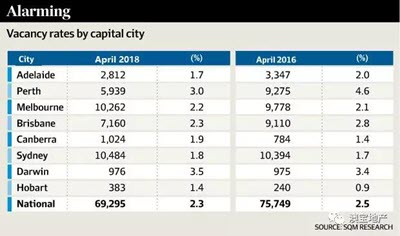
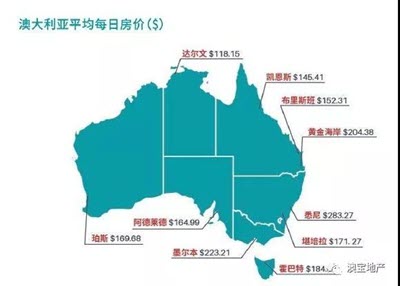
Tourism, in particular, has driven demand in the rental market. According to statistics, Australia welcomed a total of 8.8 million international visitors in 2017, up 6.6% on the previous year. The high occupancy rates and average daily room rates across Australia's major cities also confirm the market's demand for rental accommodation. The residential rental sector is expected to continue its upward trend through 2018. The Gold Coast region is likely to remain the most active market with the strongest average daily room rates, and property in tourist cities is an excellent option for investors.
Outlook forecast
Over the past few years, the data on Australian property has been very impressive. In recent years, despite instability in the international economic environment, more and more overseas investors have turned their attention to this peaceful and stable Australian continent, undisturbed by the world's conflicts. Compared with the property markets of other countries, Australian property still has relatively clear advantages.

A continuing decline indicates that ongoing demand remains strong, and rental income is expected to rise steadily. Furthermore, because new property projects (off-the-plan property, apartments, townhouses and house and land packages) carry no overseas-identity restrictions, and second-hand property transactions are convenient (in Australia, over 90% of transactions are of second-hand homes). In addition, Aobo Realty can also assist you with currency exchange, loans, and subsequent rental management services — so you can invest in Australian property with complete peace of mind!
A detailed analysis of Brisbane property
Brisbane is Australia's third-largest city, with a growing population and continually improving infrastructure. The vacancy rate in the Brisbane CBD was 2.1% in July 2018, a significant drop from 2.9% in June. For current Brisbane owners, this low vacancy rate also brings buyers substantial rental income, and as Queensland's population surpasses 5 million and infrastructure investment increases, the outlook for commercial property in the Brisbane CBD is well worth looking forward to.

At present, there is very little undeveloped land left within 15 km of the Brisbane CBD and its surrounds, so overall, buyers can focus their attention on the areas surrounding the various types of infrastructure currently under construction in Brisbane and on the Gold Coast — which means abundant employment opportunities and a large influx of population.
Conclusion
In summary, we advise everyone that, in today's market, investment calls for careful decision-making and, even more so, for seizing opportunities. Consult actively and find the property that suits you. Investing is not an either-or activity; this depends on you applying scientific investment thinking and insight into the market.
Overall, mature investors pursue a diversified allocation of assets by sensibly deploying their capital: right now, they can invest in apartment projects in popular areas (school catchments, the CBD, or tourist hotspots) to create more passive rental income; over the long term, they can achieve stable capital growth through the freehold land held by townhouses or standalone houses. When these two forms of capital work together, they further strengthen the comprehensive ability to withstand risk in the capital market, thereby minimising risk in the investment market to the greatest extent.