
7 Key Reasons Why You Should Buy Property in Brisbane
As one of the leading destinations for immigration and overseas study, Australia attracts large numbers of international students and new migrants thanks to its beautiful natural environment, high-quality education resources and comprehensive welfare system. This has also made Australian property a top investment choice for many astute investors.
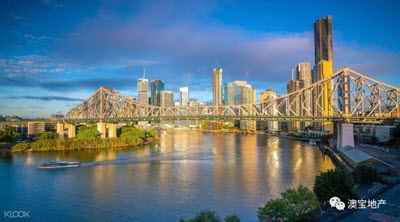
Brisbane, Australia's third-largest city, enjoys a subtropical climate that is warm and comfortable all year round. The locals are warm and hospitable, and many visitors find themselves reluctant to leave. It is precisely this urban charm that leads so many people to buy property in Brisbane. So, let Aobo Realty run through the advantages of investing in Brisbane property.
1. Attractive property prices and excellent affordabilityAccording to a report by People's Daily Online Sydney, Sydney property has become the world's second least "affordable", with house prices nearly 13 times Sydney's median household income; Melbourne, ranked fifth, has house prices almost 10 times the median household income.
According to the latest CoreLogic Home Index, Queensland's (Brisbane, Gold Coast) median house price is only half that of Sydney, while employment growth is accelerating. Banks report that in recent years people have been leaving New South Wales (Sydney) at an ever-faster rate to settle in traditional residential areas of Queensland (Brisbane, Gold Coast). Macquarie Bank's wealth management division notes that, compared with Sydney and Melbourne, Brisbane house prices are undervalued. It points out that confidence in the Brisbane property market has reached an all-time high. Clearly, this momentum is unlikely to slow in the short to medium term.
Further reading:
This Australian city is experiencing an exodus of locals!
Below is a comparison table of new-property prices across Australia's three major cities, compiled for you by Aobo Realty:
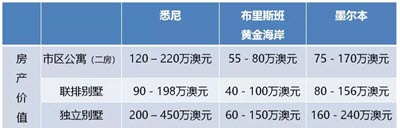
(Brisbane and the Gold Coast are very close together and are usually regarded as a single conurbation)
2. Low stamp duty for overseas buyersIn its article The Complete Guide to Australian Stamp Duty, Aobo Realty has already explained in detail the purchasing policies for buyers of different residency status across the three states in which Melbourne, Sydney and Brisbane are located - Victoria, New South Wales and Queensland, as well as the latest stamp duty rates and amounts payable.
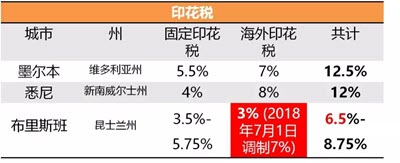
A friendly reminder: If you are interested in property in Queensland (Brisbane, Gold Coast), please be sure to sign your purchase contract before 1 July 2018 to avoid paying an additional 4% overseas stamp duty. (For example, if you choose a property worth A$800,000, signing the contract after 1 July 2018 would incur an additional A$32,000 in overseas stamp duty, equivalent to RMB 160,000.)
The overseas stamp duty policies of these three states show that Brisbane offers greater affordability and a more cost-effective opportunity to purchase property.
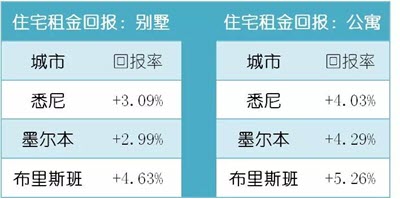
3. High rental yieldsAccording to RP Data figures, Brisbane apartment rental yields have remained at around 5.3% in recent years, while house rental yields exceed 4.5% - both relatively high among Australia's capital cities. The data also shows a housing vacancy rate of about 2% in Brisbane, with strong population growth driving a booming rental market; in prime locations, properties are often in such demand that "a room is hard to come by".
In recent years, the hosting of the G20, the Asia Pacific Cities Summit and the Asian Cup football tournament, along with the bid to host the 2028 Olympic Games and numerous other steps towards internationalisation, have won Brisbane greater government support for urban infrastructure upgrades and other projects. By 2031, the "Queensland Infrastructure Plan" will invest more than A$134.2 billion in infrastructure across South East Queensland, centred on Brisbane, with Brisbane employment expected to increase by 50% by 2031. The A$134.2 billion provides a 20-year design blueprint for Queensland, equivalent to more than A$37,000 in infrastructure investment per person each year. The A$134.2 billion plan is understood to be allocated to: transport (A$97.7 billion), health (A$6.8 billion), education and training (A$3.0 billion), energy (A$5.4 billion), water (A$1.5 billion), community facilities (A$3.8 billion) and completed projects (A$16.0 billion).
Next, please watch the video edited and translated for you by Aobo Realty on Brisbane's A$3 billion CBD redevelopment project: the Southern Hemisphere's tallest luxury casino - Queen's Wharf:
Brisbane is the only Australian city that planned for major future expansion right from the outset, and this is a "natural advantage that no other Australian city can match". Over the next 10 to 20 years, Brisbane's development will hold significant advantages. Under its urban plan, Brisbane is estimated to be able to accommodate a population of 10 million. The Australian government aims to develop Brisbane into a central business district of global significance.
Aobo link:
An analysis of Brisbane's A$100 billion+ infrastructure investment plan
5. Abundant education resourcesBrisbane is also a mecca for high-quality education, home to world-renowned universities such as the University of Queensland, Queensland University of Technology and Griffith University.
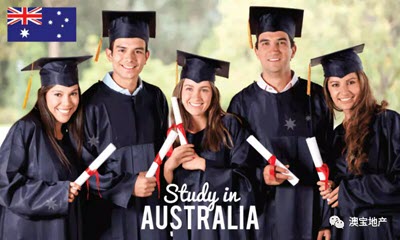
The University of Queensland is one of Australia's Group of Eight universities; its research funding and academic standing have consistently ranked among the top three of Australian universities, and it has the largest number of doctoral students. Queensland University of Technology is a research university ranked in the top ten of Australian universities. Griffith University is a higher education institution built with investment from the Australian federal government and is recognised as one of the most innovative and influential universities in the Asia Pacific region. Secondary schools such as Brisbane Boys' Grammar School, Brisbane Girls' Grammar School and Brisbane State High School also enjoy a wide reputation.
According to the latest figures from the Australian Bureau of Statistics, Brisbane's population has surpassed 2.3 million, ranking third among Australia's major cities and making it one of the fastest-growing metropolitan areas in the country. ABS data also shows that Brisbane's population growth rate in recent years has been 2.3%; beyond natural population growth, the number of interstate and international migrants has surged. Brisbane has become one of the top choices for domestic migration within Australia, and a growing number of international migrants are also choosing Brisbane as their destination city. In addition, young people aged 20 to 34 account for 33% of the new arrivals, and this group of migrants will be the driving force of Brisbane's future property market.
7. Exceptional climate and tourism resources
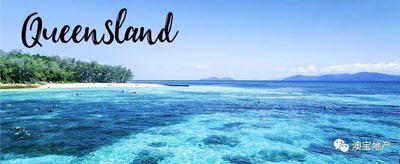
Queensland, where Brisbane is located, is known as the "Sunshine State" - picturesque and spring-like all year round, attracting countless travel enthusiasts. With its many botanical gardens and parks, there is never a shortage of places for leisure and sightseeing. The scenery around Brisbane is remarkable, with the Gold Coast and the Great Barrier Reef being the most famous, drawing visitors from all over the world every year. The Gold Coast takes its name from its 32-kilometre stretch of golden beaches and enjoys the reputation of "theme park capital". The Great Barrier Reef is the world's largest coral reef area, Queensland's biggest tourism drawcard, and one of the world's seven natural wonders.
A more liveable environment, better tax policies, superior investment affordability, higher rental returns and lower living costs all make Brisbane Australia's best city for living and investment. The Queensland government's 2031 urban plan will make Brisbane the most important business hub in the Asia Pacific region in the future - all of which represents an opportunity for investors, especially in the property investment market. As government plans unfold and the city continues to develop, Brisbane will enter a period of steady growth. Just as an elderly Chinese leader once drew a circle in Shenzhen and created the Shenzhen of today, present-day Brisbane is facing development opportunities just like those of Shenzhen.