
Australian Property Overview and Brisbane Property Market Forecast for the Next 5 Years
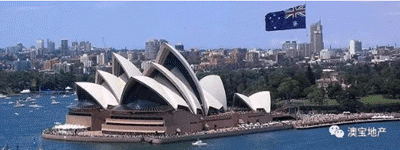
As the region with the highest property prices in Australia, although Sydney's prices have begun to fall, the prices of both standalone houses and apartment buildings in Sydney remain much higher than elsewhere.
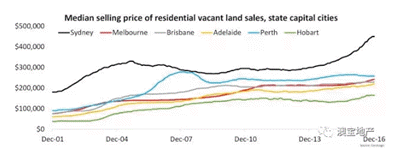
The chart above clearly shows that in recent years the price growth in Sydney and Melbourne has been much greater than in the other capital cities.
Compared with Melbourne, Sydney's prices are currently 25.9% higher than Melbourne's — the smallest gap since late 2013. Since January 2000, the average premium of Sydney prices has been 39.5%.
Compared with Brisbane, Sydney's median price is currently 96.9% higher than Brisbane's. Although the gap has narrowed recently, it was at its widest in early 2003. The average premium of Sydney houses over Brisbane has been 64.7%, well below the current level.
The situation for apartment buildings is much the same as for standalone houses: Sydney's apartment prices have fallen recently but remain far higher than in the other capital cities. In addition, apartment prices in Sydney and Melbourne have grown in recent years, while the increases in other regions have been modest.
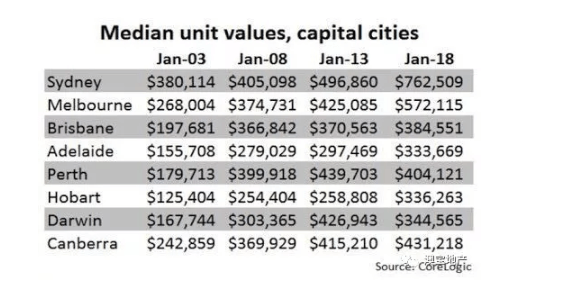
Sydney's current median property price is A$762,509, clearly higher than all other capital cities. In fact, apart from Melbourne, the median price of standalone houses in every other capital city is still not as high as the price of a Sydney unit, while Melbourne's median house price only just reaches the price of a Sydney unit.
Overall forecast
As the prices of both standalone houses and units in Sydney begin to fall, it is not hard to predict that the premium of standalone houses and units relative to the other capital cities will fall further. Although the Sydney premium is expected to decline, it will not necessarily return to its previous long-term average. In recent years, housing costs in Sydney and Melbourne have been clearly higher than in other regions. Some of the driving factors include an inadequate supply of new housing (more severe in Sydney than in Melbourne), a higher rate of migration into these cities, stronger economic performance in New South Wales and Victoria relative to other states and territories, and higher employment opportunities in Sydney and Melbourne than in other capital cities. In fact, in recent years, Queensland, as the state with the most interstate migration, has seen migrants choose it as the place to settle down with their families. Price growth is not yet very pronounced, but the outlook is boundless.
We expect that as prices fall, Sydney's premium will decrease over the coming years, but we also believe that Sydney's historical premium relative to the other capital cities does not reflect the likely future differences in property prices. That is to say, we expect housing costs in Sydney and Melbourne to remain higher than in the other capital cities, and higher than in the past.
Brisbane property market forecast
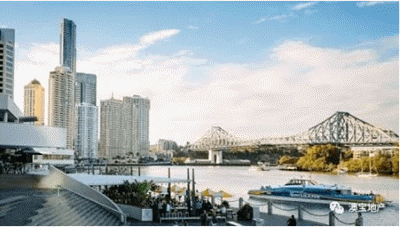
Richard Robinson of BIS Shrapnel expects Brisbane to become the best-performing capital city in the property market over the next five years. Home values in Australia's third-largest capital city have grown by 1.2% per year over the past decade — half the rate of inflation, and well below Sydney or Melbourne, which have seen average annual growth of 6.3% and 5.9% respectively over the past decade.
Brisbane's housing market will not be affected simply because other cities are underperforming, and the relative difference in pricing between Australia's capital cities may be one of the factors attracting housing demand.
Importantly, a range of economic and population growth factors are likely to become significant in supporting improved conditions across the Brisbane market, including economic and demographic trends, as well as the somewhat weaker performance of the two major cities of Sydney and Melbourne — all of which will provide Brisbane with a strong benchmark.
In addition, Queensland's overseas and interstate population growth rates are rising, with most of that growth in the state's south-east corner. However, net overseas migration remains well below New South Wales and Victoria, though it is now at its highest level in more than three years. Net interstate migration is a major factor in Queensland's development, and Queensland has also been the state attracting the most migrants from other regions over the past eight and a half years. Queensland's net domestic migration is now the highest of all the states, surpassing Victoria for the first time since June 2013.
Queensland's labour market is also strengthening. The state's employment growth is the fastest of any state or territory. According to trend data, as at November 2017 the employment growth rate reached 4.8%, far higher than in other regions. In raw figures, Queensland created 113,000 jobs over the past year, more than New South Wales (111,000) and Victoria (94,000).
Employment is an indispensable part of a hot property market, and a strong workforce is a key component of Brisbane's booming property market. The combination of improved employment, high migration and affordability is a solid recipe for strengthening housing market conditions.
Brisbane's development
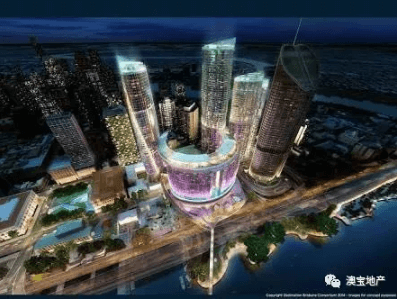
Good news came one after another as 2018 began. The artistically designed Queen's Wharf, with A$3 billion of investment, is the largest development project in Brisbane's history. To make way for it, the former state government buildings on George Street have been demolished, clearing the way for the construction of an integrated casino resort — a project that will bring a magnificent new dimension to Brisbane's cityscape.
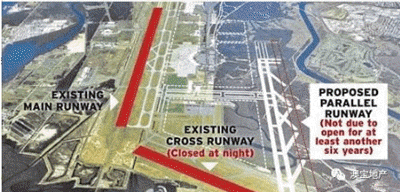
According to the Brisbane Times, Brisbane's new airport runway will be completed by transforming Queensland's largest sand pit, and the new airport facilities will rival Singapore's Changi Airport, ranked sixth in the world.
Overall, Brisbane's property market conditions will see considerable improvement over the coming years. Given Brisbane's current stage of development, its charm lies in growing steadily and gradually, one step at a time. It will not experience the dramatic ups and downs of Sydney and Melbourne, but will maintain its own steady pace of development throughout.