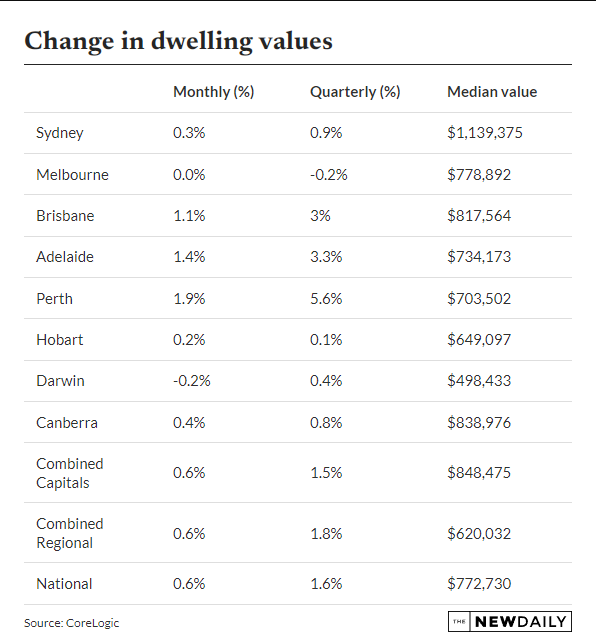
National house prices keep rising: Brisbane climbs 3% in the first quarter, with the city's five-year total growth now exceeding 63% — the highest in Australia!
National house prices reached a record high in March and are set to rise further over the coming months, as strong population growth and a tight rental market, combined with the lowest building rate in a decade, have created an imbalance between supply and demand.
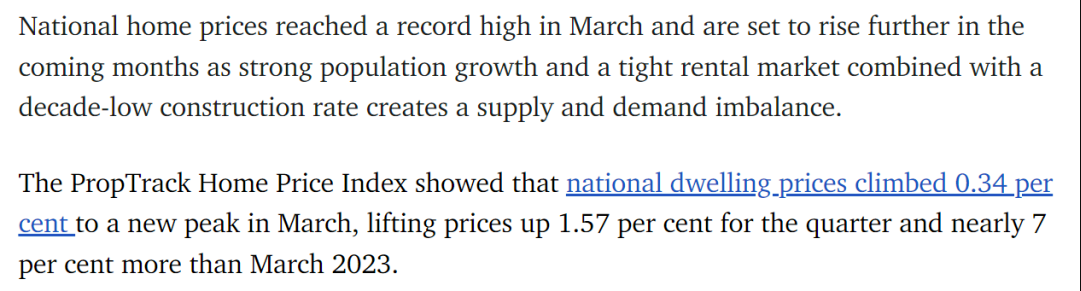
The PropTrack Home Price Index shows that national residential prices climbed 0.34% in March to a new record high, taking price growth for the quarter to 1.57% and putting values nearly 7% higher than in March 2023.
The changes in each state's median price over the first quarter of 2024 are shown below:
Creagh said the supply-demand imbalance is likely to further offset the effects of constrained affordability and a slowing economy, and she expects any interest rate cut to accelerate price growth. The economist added that although the migration rate is expected to ease from this year's record high, the number of homes under construction remains well below the government's target of 1.2 million dwellings, which will help push up purchase prices.
First-home buyers increased by 16.8% in the first quarter of 2024 and by 12.8% over the 12 months to December 2023.
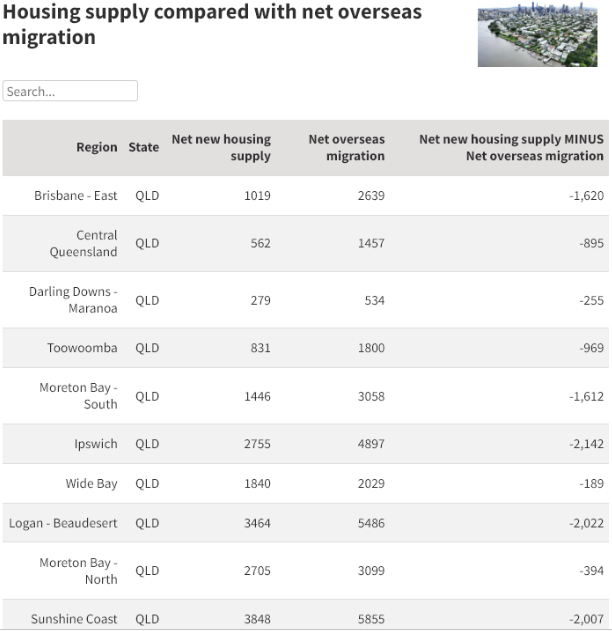
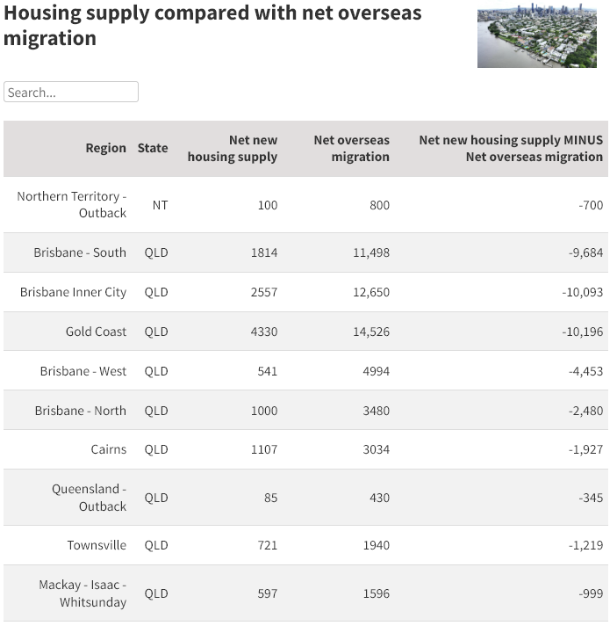
Based on an analysis of migration and construction data, Brisbane and the Gold Coast are the areas in Queensland facing the most severe housing shortages.
The analysis also found that in the last financial year, 380,000 more migrants arrived in Australia than the number of homes built.
According to research by the Institute of Public Affairs, Australia's housing supply increased by 148,600 new dwellings in the 2022–23 financial year, while net overseas migration for that year was 528,392 people — 3.5 times the total number of new dwellings. Based on the assumption of an average Australian household size of 2.5 people, 211,357 dwellings would be needed, which would mean a shortfall of 62,757 dwellings.
A comparison of housing construction numbers and population growth across Queensland's key regions is shown below: as can be seen, nearly all are in a market state of demand exceeding supply.