
The Complete Guide to Australian Stamp Duty (2020 Updated Edition)
Hello everyone. Today I'm here to give you a rundown on the property-buying policies for buyers of different residency status in the three states that are home to the three most popular cities for overseas buyers coming to Australia — Brisbane, Melbourne and Sydney — namely Queensland, Victoria and New South Wales, along with the latest rates and amounts of stamp duty payable.
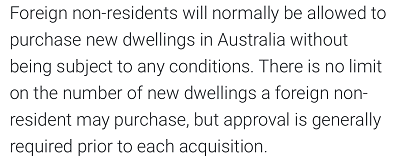
First of all, all overseas persons are able to buy property within Australia. However, overseas persons of different residency status are subject to different rules when buying property in Australia.
1. Overseas persons holding a temporary residency visa (meaning overseas persons holding a visa valid for more than 12 months) may only purchase one established dwelling, and the applicant must be within Australia when submitting the FIRB application for an owner-occupied home. Furthermore, that established dwelling may only be used as the buyer's own residence and cannot be rented out; within three months of moving out of the residence, the property must be sold.
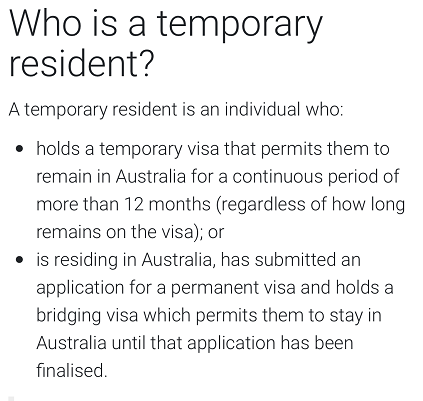
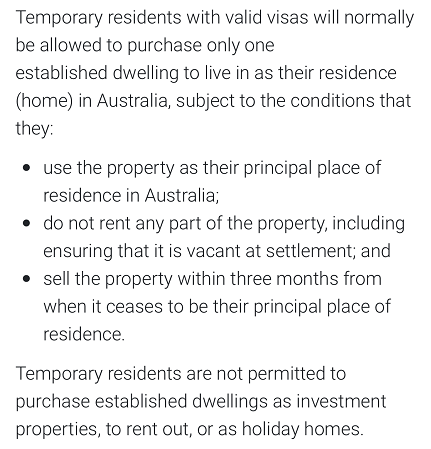
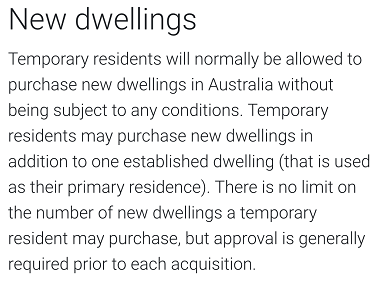
2. Overseas persons holding a temporary residency visa are not subject to the above requirements when purchasing new dwellings, and may buy any number of them.
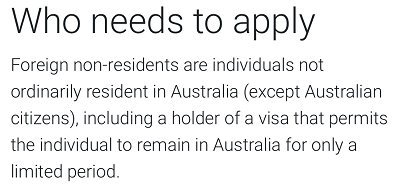
3. Overseas persons with no visa, or with a visa valid for less than 12 months, cannot buy established dwellings; they may only buy new dwellings, or buy land to build on for investment purposes.
4. Overseas persons holding a bridging visa cannot buy an established dwelling on their own.
5. Overseas persons holding a tourist visa cannot buy an established dwelling, even if their visa runs for more than 12 months.
Australian property prices keep climbing, and in order to encourage local residents into the property market, the Australian government has repeatedly introduced overseas stamp duty to dampen investment enthusiasm among overseas persons.
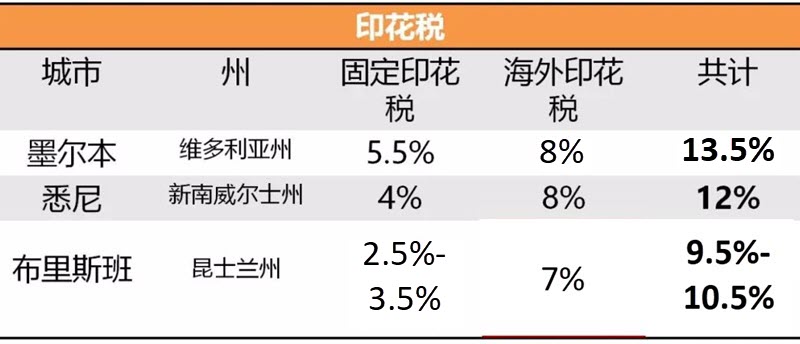
In the 2016 financial year the Victorian government introduced a stamp duty surcharge on "overseas buyers" purchasing residential property, making it the first state in Australia to implement overseas stamp duty. New South Wales and Queensland subsequently followed suit. Next, let's take a look at the specific policies for additional stamp duty and land tax in these three states. Below is a summary of the latest stamp duty policies for the three capital cities:
Brisbane – Queensland Overseas Stamp Duty Policy
Who it applies to: foreign nationals or Australian temporary residents
Rate charged:
Depending on the individual property, local stamp duty of 2.5%–3.5% is charged, plus a further 7% overseas stamp duty, for a total of 9.5%–10.5%.
See the diagram below for the detailed method of calculating local stamp duty:
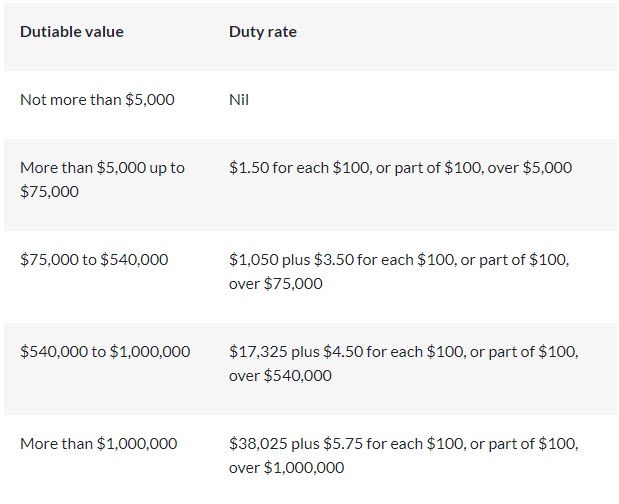
Case study: In Queensland, an asset worth A$800,000 is subject to A$21,850 in stamp duty and A$56,000 in overseas stamp duty.
For more information, please refer to the official website of the Queensland Office of State Revenue:
https://www.treasury.qld.gov.au/taxes-royalties-grants/index.php
Melbourne – Victoria Overseas Stamp Duty Policy
Who it applies to: foreign nationals or Australian temporary residents
Rate charged:
When an overseas person buys an off-the-plan property in Melbourne (Victoria), the stamp duty payable comprises two parts: 5.5% local stamp duty + 8% overseas stamp duty, for a total of 13.5%.
See the diagram below for the detailed method of calculating local stamp duty:
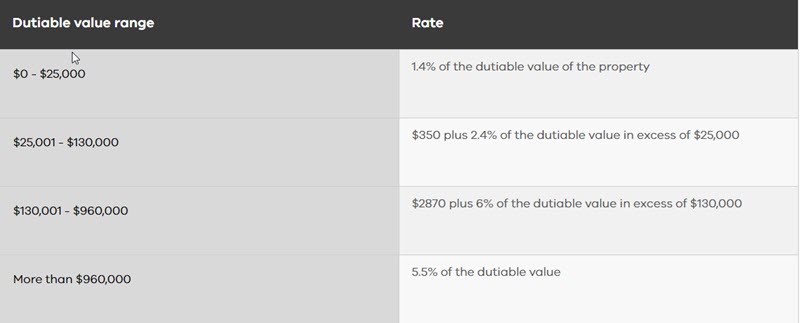
For more information, please refer to the official website of the Victorian State Revenue Office: http://www.sro.vic.gov.au/node/1658
Sydney – New South Wales Overseas Stamp Duty Policy
Who it applies to: foreign nationals or Australian temporary residents
Rate charged:
When an overseas person buys property in Sydney (New South Wales), they must pay4% local stamp duty + 8% overseas stamp duty, for a total of 12%. And there are no stamp duty concessions whatsoever for buying off-the-plan property.
See the diagram below for the detailed method of calculating local stamp duty:
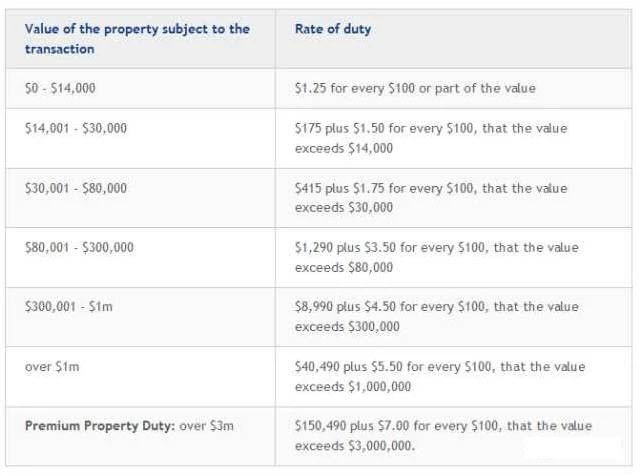
For overseas persons, in addition to overseas stamp duty, an extra land tax also came into effect on 1 January 2017. If you purchase commercial real estate such as a retail shopfront or office, the surcharge is not charged. From 2018 onwards, the land tax surcharge doubled to 2%.
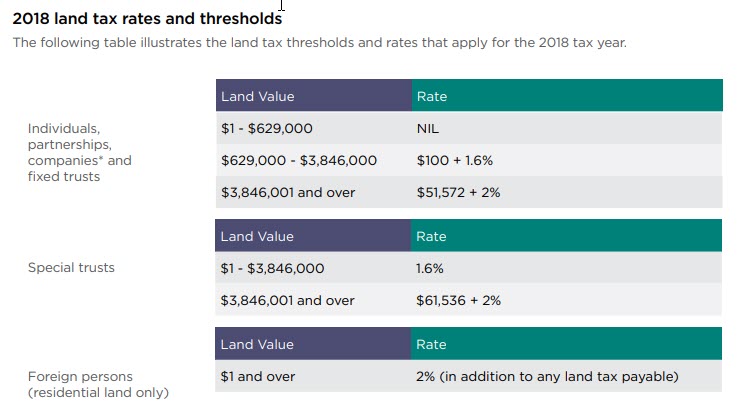
For example: an overseas person who buys a parcel of land worth A$800,000 must pay a one-off A$96,000 in stamp duty, plus A$16,000 in land tax once each year thereafter, until it is sold.
For more information, please refer to the official website of the New South Wales Office of State Revenue:
http://www.osr.nsw.gov.au/info/news/foreign-investor-surcharge